


By Sarada Lahangir
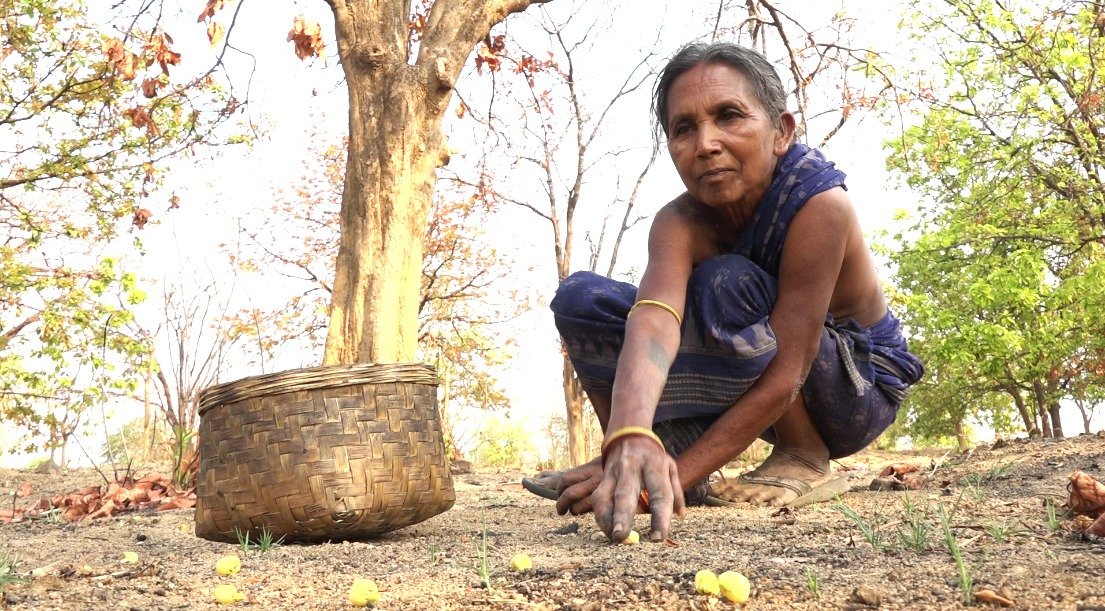
Bargarh/Nuapada (28th April 2026): Before dawn breaks over the hills, when most villages are still wrapped in sleep, 52-year-old Sukumari Rana of Jharbandh village of Bargarh district steps out of her mud house carrying a bamboo basket and a cloth sack. The stars are still visible. Her two daughters sleep beside the dying embers of last night’s fire. She must return before noon, cook for the family, fetch water, and then sort the day’s collection.
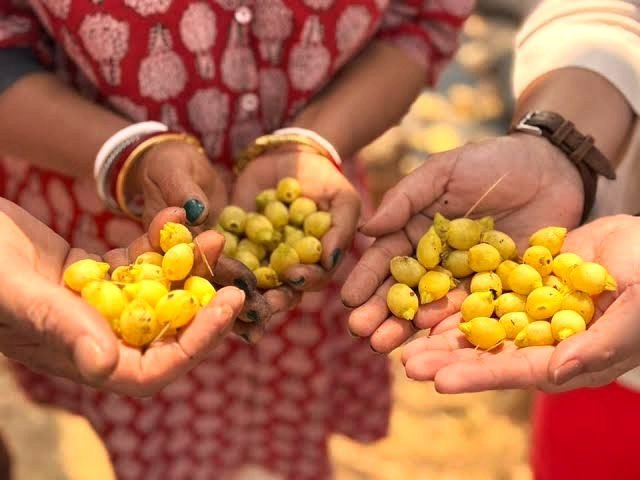
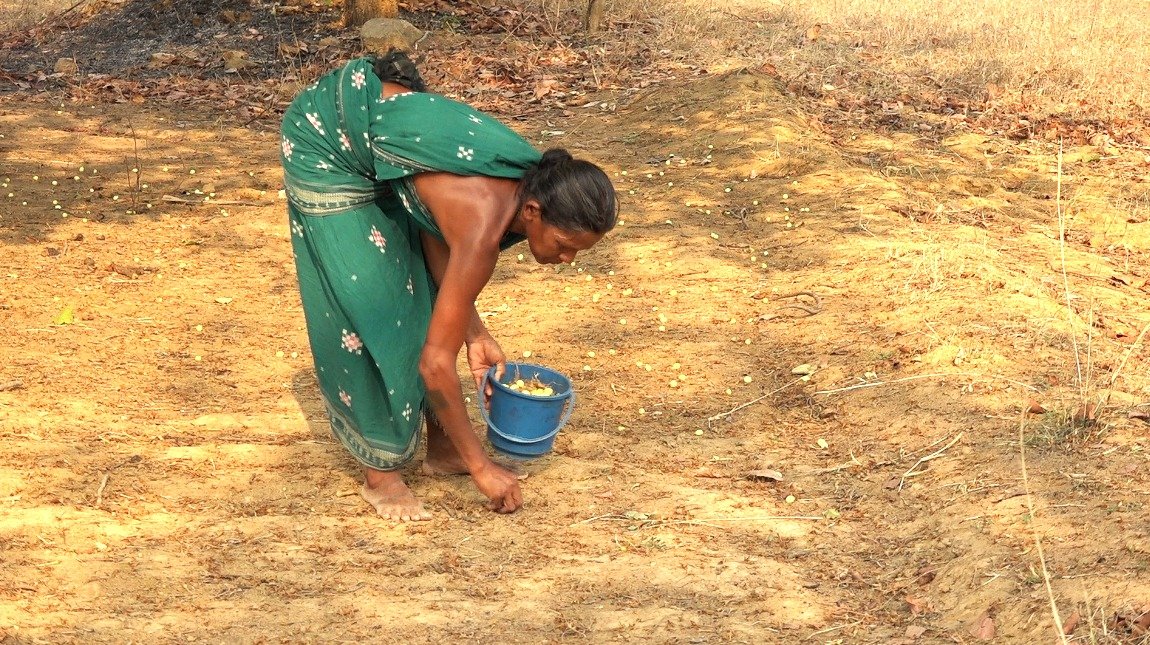
Like hundreds of tribal women across Odisha’s forested districts, Sukumari’s summer begins not with rest, but with the annual race to gather mahua flowers (Madhuca longifolia). These pale-yellow blossoms fall from towering trees and carpet the forest floor in the early hours.
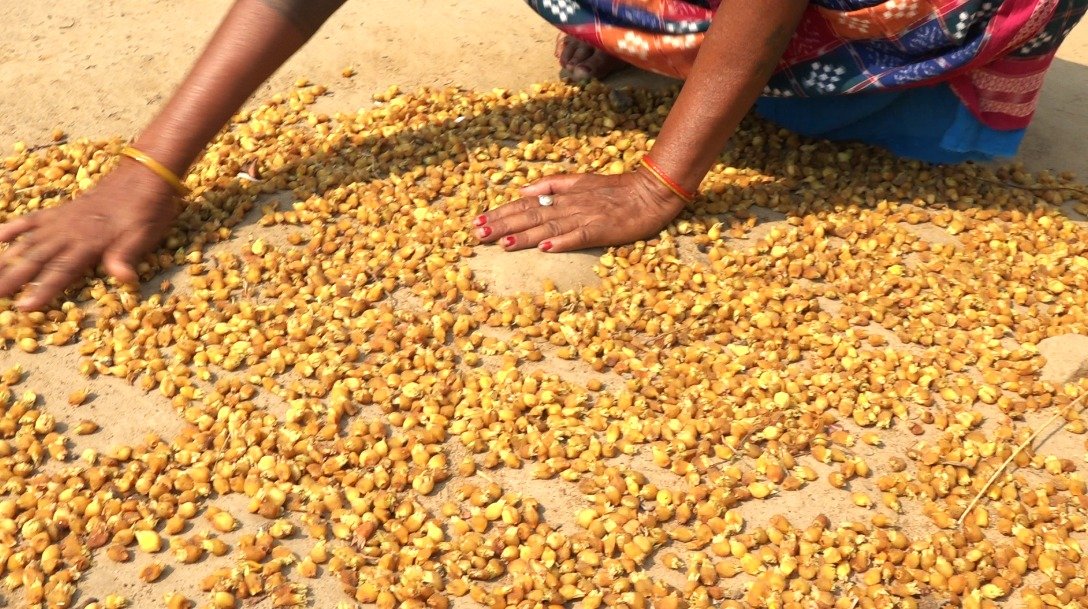
For generations, mahua has been called the “tree of life” in tribal belts. Its flowers are eaten, dried, sold, fermented, fed to cattle, and used during ceremonies. For poor families with little land and uncertain farm income, mahua is not just a forest produce. It is cash for medicines, school notebooks, seeds, weddings, and survival during lean months.
But for the people who collect it, the sweetness of mahua has turned bitter.
Across western and central Odisha, tribal gatherers say they are trapped in a system where there is no assured price, no organised market, no storage facility, and little protection from middlemen who dictate terms. While the forests yield abundance, the people who depend on them remain poor.
A Day’s Labor, A Trader’s Price
“When the mahua flowers begin to fall, we wake up before the birds at about 4 am. We walk into the forest in darkness, carrying baskets on our heads and fear in our hearts. We bent the whole morning picking each flower one by one. By the time we return, our backs are broken and our hands smell of the earth. But when the traders come, they look at our hard work as if it has no value. They give whatever price they wish. We cannot argue because our children need rice, medicine, and clothes. ” Sukumari lamented.
While I was asking Sukumari about the price of the Mahua, she responded, “We don’t know what the actual price is.” Sometimes the traders took in 15 rupees per kg; sometimes they buy at Rs 20 per kg.
Though the Minimum Support Price (MSP) for Mahua flowers and seeds (Madhuca longifolia) in Odisha is ₹29 per kg, fixed by the Ministry of Tribal Affairs, Sukumari, who has been gathering the Mahua since her childhood, has yet to know that there is an MSP for the Mahua flower.
The Tribal Development Co-operative Corporation of Odisha Ltd (TDCCOL) acts as the state procurement agency to ensure tribal gatherers receive this fair, regulated price, preventing exploitation by private traders. However, like Sukumari, many tribal communities in western Odisha depend on the mahua to support their livelihoods during this season and are facing the same challenges.
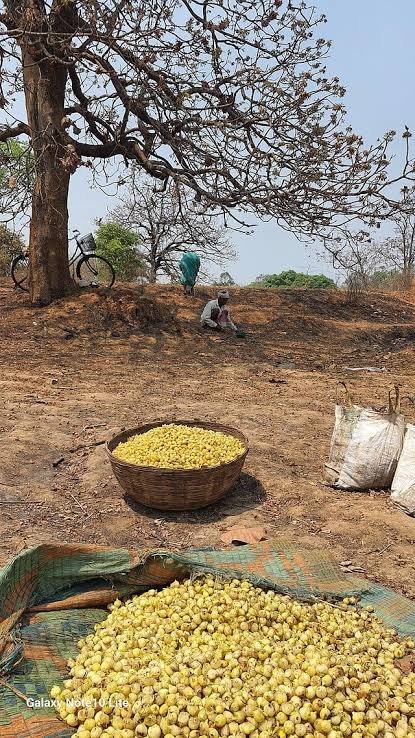
Janaki Chatria, 40, from the Sunabeda of Nuapada district, says, “We used to begin at 4 am every day with a stick to ward off stray animals and snakes and a bamboo basket, because during the flowering season, every hour matters. If we arrive late, others may collect from the same patch, or the flowers may rot in the heat. We bend for hours, gathering blossoms one by one from the ground. By sunrise, our backs ache. By mid-morning, each of us may collect 20 to 30 kilograms of fresh flowers if the season is good.”
It looks easy when someone sees a sack full of mahua, but they do not see the pain in our knees, the cuts on our feet, or the fear of wild animals. And after so much pain, if we don’t get a good price, then you can imagine how it feels.” She regretted
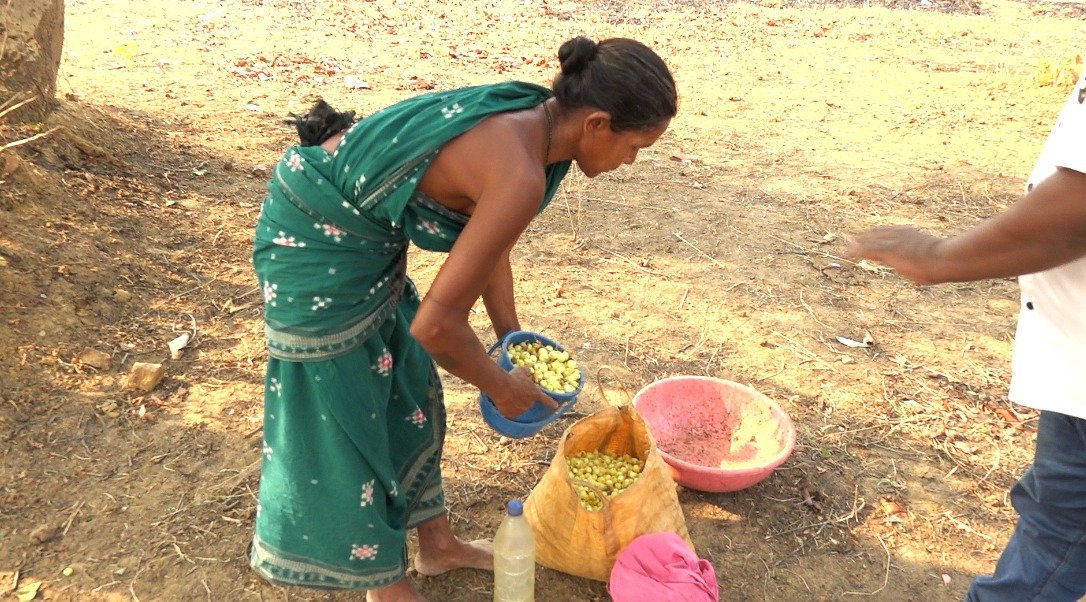
Once home, the flowers are spread on mats or tarpaulin sheets to dry. If unexpected rain comes, the crop blackens and loses value. If moisture remains, traders reject it or lower the rate.
This year, villagers in several districts reported a successful flowering season. But instead of higher earnings, prices crashed.
“Last year, traders paid around Rs 35 to Rs 40 per kg in the beginning,” says Babrubahan Naik, a resident of a forest village in Nuapada. “This year, some offered only Rs 18 to Rs 22. Later, they said quality is poor and reduced it further.”
With no government procurement center nearby, villagers have only two choices—sell cheap or hold stock and risk spoilage.
Stored in Sacks, Money Locked Away
In Dudukidadar village of Jharbandh block of Bargarh District, a couple of gunny bags filled with dried mahua flowers lie stacked in a room belonging to a self-help group. Women say they have collected nearly 10 quintals this season until now but have sold very little.
“We are waiting for a better rate,” says Arati Nag, one of the collectors. “But every week, traders say prices have fallen.”
The flowers, if stored too long in humid weather, attract fungus and insects. Poor households cannot afford pucca godowns or moisture-proof storage. Many homes have leaky roofs and cramped spaces.
“Keeping mahua at home is like watching money rot in front of your eyes,” Arati says quietly.
Middlemen Control the Trade
In remote villages of western Odisha, traders often arrive on motorcycles or small pickup vans with weighing scales and cash in hand. They know villagers need immediate money.
“They come when school fees are due or when someone is sick,” says Ramesh Pradhan, a community organiser in Bargarh. “That is when they get the cheapest rates.”
“Last month, a trader came to our village and promised to buy my mahua flowers at Rs 30 per kg. I trusted his words because I had no other buyer. After weighing all the sacks, he suddenly changed his tone and said the flowers were not of good quality and had too much moisture. Then he offered only Rs 20 per kg. What could I do? I had carried the produce so far and needed money for my children. I sold it with tears in my eyes. We do all the hard work, but others decide the price of our labour,” said Jamuna Sahi of Dechuan village of Bargarh district, a tribal collector.
Because most transactions happen informally, there is rarely any written record.
Women Bear the Hardest Burden
Though men may help in transport or negotiations, the collection work is done mostly by women and girls.
They wake first, finish household chores, walk long distances, gather flowers under the sun, dry them, store them, and then often carry sacks to roadside markets on their heads.
In many villages, adolescent girls miss school during peak collection weeks because every helping hand counts.
“This is women’s labour, but no one counts it,” says a local journalist, Motilala Bag, working with tribal communities. “When income comes, it is small. When hardship comes, it is large.”
A Valuable Produce, But No Fair Value
Mahua has significant commercial demand. It is used in food products, herbal preparations, traditional liquor brewing, cattle feed, and increasingly in value-added products such as syrups and wellness items.
Yet the primary gatherer receives the least share of its value chain.
A kilogram bought from villagers at Rs 20 may later fetch much more after cleaning, storage, and resale through traders and wholesalers. About one kilogram of mahua flowers is required to prepare one liter of Mahuli, a traditional liquor made from the flower, which is sold for Rs 100 to Rs 150 per liter.
“The forest people take all the risk,” says Manohar Chouhan, a forest rights activist and expert of Nuapada district. “Others take the profit.”
Laws That Confuse Rather Than Help
Mahua also sits in a complicated legal space.
Mahua comes under the minor forest produce, and as per the Forest Rights Act,2006, the forest-dwelling communities have rights to collect, store, process, and sell minor forest produce. On the other hand, Mahua’s storage, transport, and sale are often regulated under the Bihar and Odisha Excise Act, 1915, because the flower is traditionally used for brewing liquor.
This contradiction creates confusion at the ground level.
“Since mahua flowers are widely used in the preparation of traditional liquor, their storage, transport, and sale are governed by excise regulations. Because of these legal provisions, procurement through TDCC has not been brought under our system. Similar issues arise with some other forest produce as well, where separate state or central laws create administrative complications,” says Chandan Gupta, marketing manager for TDCC.
Dambru Haripal, Officer In Charge, Paikmal Excise Station, says, “As our department regulates mahua, it is also used for liquor production. We are here to check illegal trade, not trouble genuine forest gatherers. But since many poor families depend on mahua income, there should be a clearer system so livelihood activities are protected while the law is enforced.”
However, the villagers say they are asked for permits in some areas, while traders move stock with ease. Community leaders argue that rules meant to regulate alcohol should not punish poor gatherers selling flowers for a livelihood.
Chauhan says, “When laws overlap, the weakest participant in the chain usually suffers the most.”
Panchayats Without Power
In pen and paper, local bodies, cooperative systems, and SHGs are expected to help forest gatherers secure better returns. In practice, they lack infrastructure, funds, transport, and storage.
There are villages where no procurement center exists within reachable distance. In others, people say rates are not communicated in time, or procurement starts after peak collection is over.
“If support comes after the flowers are sold, what is the use?” asks Raibari Gadtia, a collector from Nuapada, Odisha.
Migration Follows Exploitation
When Mahua income fails, families borrow money or migrate.
From western Odisha districts, many men travel seasonally to brick kilns, construction sites, and farms in neighboring states. Women are left behind to manage homes, children, and forest gathering.
“Mahua was once enough to carry us through difficult months,” says an elderly woman from Sinapali, Nuapada district. “Now even that support is shrinking.”
What Gatherers Want
“We are not asking for charity, only a fair chance to earn from our labor. If the government fixes a minimum support price before the season starts, opens procurement centers near the villages, ensures proper weighing and same-day payment, and provides storage facilities in panchayats, it will help us greatly.” Says Laxmi Rana, a Mahua gatherer from Jharbandh.
Sujata Pradhan, president of Satark, a non-government organization (NGO) in Jharbandh, which is working for the marginalized community, says, “The government should ensure that women’s groups can sell directly without middlemen, and the laws must be made clear so that poor gatherers are not harassed. Small processing units in villages can also create better income. If these simple steps are taken, their earnings can improve, and migration from villages will reduce.”
The Forest Gives, The System Takes
As the season nears its end, Sukumari looks at the sacks stored in one corner of her house. Her younger daughter needs new slippers. Her husband has a fever. A moneylender visited yesterday.
She knows a trader may come tomorrow.
“He will say the market is down,” she says. “He always says that.”
Then she pauses.
“But the flowers fell from our trees. We picked them with our hands. Why does the price never belong to us?”
In Odisha’s forests, mahua continues to bloom each summer. What has failed to bloom is justice for the people who gather it.
(Sarada Lahangir is a Bhubaneswar-based Independent journalist)