


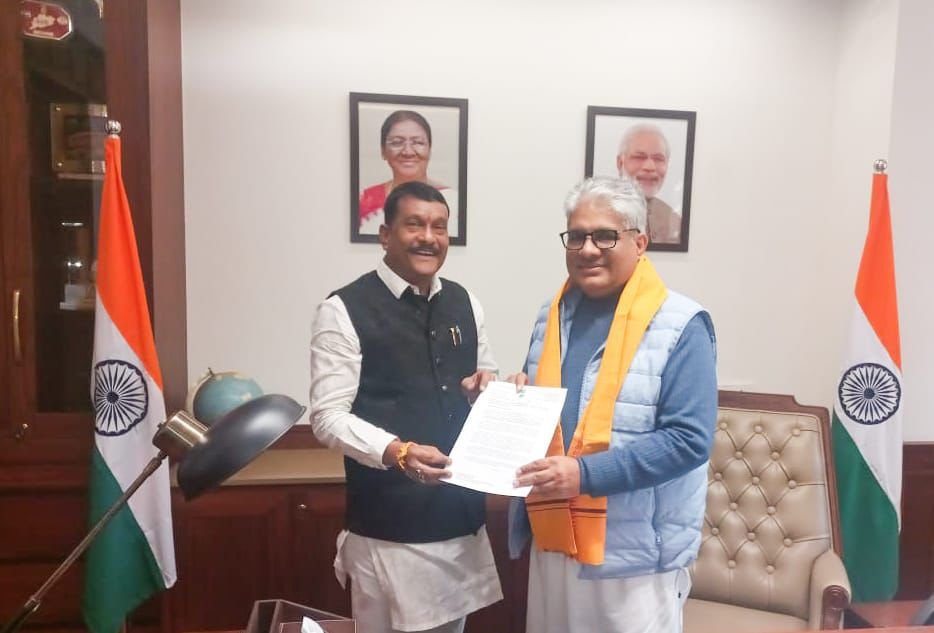
New Delhi/Bargarh: Bargarh Member of Parliament Pradeep Purohit has brought two grave environmental concerns of western Odisha to the attention of the Union Government, warning that unchecked industrial pollution and ecological neglect are pushing the region towards a deeper health and environmental crisis. In two separate letters addressed to Union Environment, Forest and Climate Change Minister Bhupender Yadav, the BJP MP has highlighted alarming conditions in Jharsuguda and the growing threat to the ecologically rich Gandhamardhan Parbat in Bargarh district.
The first letter focuses on Jharsuguda, one of Odisha’s major industrial hubs, where air, surface water, and groundwater pollution have reportedly crossed dangerous limits. According to widespread complaints from local residents, the impact of pollution is no longer confined to environmental damage but has become a full-blown public health emergency. People in the region are increasingly suffering from severe respiratory illnesses, drinking water sources have become contaminated, and thick layers of dust from industrial activity continue to disrupt daily life.
Despite repeated representations by citizens and local bodies, the MP has pointed out that regulatory agencies such as the State Pollution Control Board and the Central Pollution Control Board have failed to take decisive action against polluting industries. Terming the situation unacceptable, Pradeep Purohit has demanded a high-level enquiry led by senior IAS officers, comprehensive inspections of all industrial units in and around Jharsuguda, and immediate punitive measures against violators of environmental norms. His intervention is being seen as a strong acknowledgment that industrial growth without accountability has pushed the region into a health and environmental danger zone.
In his second letter, the MP has shifted focus to Gandhamardhan Parbat, a mountain range revered for its ecological, medicinal, and cultural importance. Located in Bargarh district, Gandhamardhan is known for its rare medicinal plants, sacred groves, and deep connection with local tribal communities who depend on the forest for their livelihood and traditional practices.
Pradeep Purohit has urged the Centre to declare Gandhamardhan Parbat an Ecologically Sensitive Zone, citing persistent threats from mining and quarrying activities. He has stressed that granting ESZ status would place legal restrictions on destructive activities such as mining and large-scale deforestation, help conserve fragile biodiversity, and open avenues for eco-tourism and sustainable development that benefit local communities without harming nature.
Together, the two letters reflect the contrasting yet interconnected realities of western Odisha. While Jharsuguda represents the cost of unchecked industrialisation and regulatory failure, Gandhamardhan symbolises a vulnerable ecological heritage that still has a chance to be preserved if timely action is taken.
Environmental activists and local residents see the MP’s moves as a crucial step in pushing the Centre to intervene decisively. With public health, environmental sustainability, and the rights of indigenous and local communities at stake, the message from western Odisha is clear. Strong and accountable environmental governance is no longer optional, but essential for the survival and well-being of the region’s people.